Wednesday, April 20, 2016

"Finding Phong" (Tim Phong): A Review & Interview with Phong


For a Subversity Show Online bilingual (Vietnamese/English) interview with Phong, click here.  Thanks to Thuy-Van Nguyen for interpreting! 
Garnering the Community Spotlight Award at the 2016 Vietnamese Film Festival held in Orange, California, “Finding Phong” (Tim Phong) is an exquisitely beautiful and revealing 2015 film about a young Vietnamese man’s journey to become a young woman. 

Scene from "Finding Phong":  Mother (in background) with Phong
 Although the film lists two veteran indie filmmakers Tran Phuong Thao and Swann Dubus as co-directors, credit nonetheless also belongs to the subject of this documentary, Le Anh Phong.  Phong manages capture with small video cameras her own journey (while trapped in the body of a male), as she filmed herself talking to her mother who is far away back in their rural home in Quang Ngai province in Central Vietnam.  

Selfie scene from "Finding Phong"

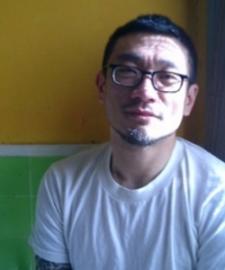
Phong with Subversity Show host
Self-identifying as a girl in her childhood, the star of the film also manages to capture what must be an ethnographer’s dream footage, as sister, brother and friends talk explicitly about heterosexual sex including ejaculation and oral and penetrative sex.  In addition to her mother, in her 70s, who wonders why she is fated to have such a son (she had been happy the boy was born), the bearded father (in his eighties) is shown saying that it doesn’t matter boy or girl as long as there is support for the Revolution!
 
The film has been expertly and carefully edited out of 250 hours of footage and ends right after Phong manages to complete the physical transition at a Thai clinic.  It was totally unscripted, and could not have been, given the gems of humanity that remain in the film after its length was trimmed. 
Kudos to the producers Gerry Herman and Nicole Pham who have partnered with Phong to see this amazing film reach the festival audience worldwide.  It won France’s Nanook GrandPrix at the 34th Festival International Jean Rouch last fall, and furthermore a DVD of the film has been added to every French school library in an attempt at helping overcome discrimination against the transgendered.  

Phong at VFF
Most significantly, Phong tells me in our brief Subversity Show Online interview, Phong’s mother testified before state legislators, and Phong’s story of her gender transition no doubt was instrumental in the passage of Asia’s first law permitting transgendered to register in their chosen gender, when Vietnam’s legislature passed such legislation last November.  The law comes into effect in 2017 after 282 legislators voted in favor of it, out of 366.  Unlike Phong, who had to travel to Thailand for her operation, future Vietnamese transsexuals will be more likely to find receptive clinics within Vietnam.  Phong, who had moved to Hanoi to go to university and discovered she was not alone as a transgendered, now works for the state Puppet Theater there, painting the figurines that are used in Vietnamese cultural productions.  – Daniel C. Tsang.

Friday, April 15, 2016

Queer Cinema from Vietnam at Vietnamese Film Festival 2016

Two features and one short depict queer cinema from Vietnam will be screening Sunday, 17 April 2016 at VAALA's Vietnamese Film Festival that has just opened at the AMC 30 (The Outlets) in Orange, California.

A prizewinning film on the journey of Le Anh Phong from male to female is Finding Phong, who herself will appear at the festival.  The film has already made a strong impact in Vietnam, which earlier this year passed legislation facilitating the legal recognition of trans people there, after officials viewed the film.  It is directed by Tran Phuong Thao and Swann Dubus.

Ticket information and synopsis


Paired with Finding Phong is a 19-minute short, about a gay male couple in Vietnam, We are Coming Home. It is directed by Le My Cuong.

Ticket information and synopsis

 Joining a free "Finding Phong and the Vietnamese LGBTQ Community" discussion (open to the public) after the showing at 1 pm Sunday April 17, 2016 is producer Gerry Herman, the Hanoi-based independent film figure who has for over a decade managing the Hanoi Cinematheque that he founded in Vietnam's capital.  Another panelist is cp-producer Nicole Pham.  The panel will also include members of VROC: Viet Rainbow of Orange County, California. 

Another queer feature is Big Father, Small Father and other Stories, focusing on male lust among various characters set in modern-day Vietnam. It is directed by Phan Dang Di and was in competition at The Berlinale. The film stars Do Thi Hai Yen (Quiet American, Pao's Story and Adrift), Le Cong Hoang as well as Truong The Vinh.
 

Big Father...
Ticket information and synopsis


Another scene from Big Father...
 -- Daniel C. Tsang.  

Thursday, March 3, 2016

"Boiling Pot" Stirring Up Campus Dialogues on Racism

To listen to the post-screening panel discussion, click here.

Irvine -  Just a half-dozen years ago, Russell Curry was a leading protester at University of California, Irvine - speaking out in support of muslims and people of color on campus.  He rallied activist students and staff at the flagpole and got them to "put your fist in the sky" to fight injustice.  He went to the Gaza on a peace and aid mission.  Through it all, his mission was to reach out to challenge and engage even those who disagreed with him, in rallies, one-on-one discussions, and on KUCI, where he appeared on the Subversity Show several times.

"Sonny Boy" (as he was then known by his rap name) was back on campus Tuesday, 1 March, 2016, almost six years to the day after his last major rally.  Professionally, he works a handsome male model -- but Russell Curry remains a powerful political voice of reason, even as he has now become an integral part of a new explosive film that intelligently explores, without exploiting, the current national debate at institutions of higher education around race and racism.

Russell Curry rallying Anteaters 4 March 2010 almost exactly six years ago.
Russell Curry remains true to the activist past honed at UCI, and that experience impacted the film, as he explained in the Q&A after a free showing of "Boiling Pot: The Truth is Never Black and White," although he was typically quite modest about his role, looking back. 

The film is a dramatization based loosely on two notable real-life racist campus incidents - a noose found hanging from a bookcase at UC San Diego Library, and the notorious off-campus "Compton Cookout", a "black-themed" party that served watermelon and the frat brothers wore baggy clothes, posing as blacks.  The incidents sparked disgust and even got picked up nationally in the New York Times, which ran a story 26 February 2010 under the headline, "California Campus Sees Uneasy Race Relations."

Watching the film that was shown as part of the UCI Sudent Affairs' New Narratives series, I was blown away by the tight editing and dynamic pace of what turned out to be a thriller and murder mystery.  At points I was on the edge of my seat, straining to catch it all in.  Definitely, credit belongs to director Omar Ashmawey, who also co-wrote the script with his brother, Ibrahim, for skilled directing of a multi-ethnic cast.
Ibrahim Ashmawey, Andrew Luu, Russell Curry
and Omar Ashmawey, from "Boiling Pot" panel discussion

While a few in the audience after the screening wondered whether the film was too one-sided,  I have to disagree.  The main characters were decidedly more nuanced than cartoonish,  and whether black, Arab, Asian or white, almost all were portrayed as self-analytical and ultimately redeemable.  Especially striking was Academy Award winning actor Louis Gossett Jr., who superbly portrayed a dogged bulldog of a law enforcement interrogator, Detective Haven.

Russell Curry answers questions
I was also struck by Ibrahim Ashmawey, who portrayed an Arab American, Hazem Seif, from New Jersey who was dating the female character, Valerie Davis, stunningly played by Danielle Fischel. 

Russell Curry, who played a bit part as a black student, Malik Stanton, was especially notable with his restrained acting and thoughtful face. 

Three white characters were also noteworthy: John Heard, played the racist father of Valerie, Tim Davis.  Matthew Koenig, a recent UCI MFA graduate, portrayed in quite some depth a one-time love interest of hers, Garrett Perrin.  Finally, M. Emmet Walsh played a clueless  fictional dean of students Marison - who viewed racial incidents as "isolated" and nothing to raise a fuss about.  Quite a devastating critique of campus administration, ironic since the film screened as part of a dean of students program at UCI. 
 

There were no "trigger warnings" thankfully at the showing, although it turns out one student in the audience would later identify himself as a high schooler.  Whether it will be shown at high schools of course an open question, given the constraints teachers and students have under varying local school boards.  But it should be.   High schoolers - many dealing with the same racism - should not be denied the opportunity to engage in "new narratives" either. 

The film is viewable online (not free) via Amazon.

After screening, Russell Curry (left) meets fans
Photography © Daniel C. Tsang 2010, 2016

-- Daniel C. Tsang.


Sunday, January 24, 2016

Zunar Shows Pen is Stronger than Sword: Continues Drawing Despite Prospect of 43 Years Imprisonment for "Sedition"

To listen to our Subversity Online 48-minute interview with Zunar, click here.

Back cover of Zunar's recent book, Sapuman: Man of Steal.

Zunar during our interview
Irvine -- Political Cartoonist Zunar, whose pointed drawings target corruption and injustice in Malaysia, faces a combined 43 years' imprisonment in a trial for seditious tweets slated to begin later this week in Kuala Lumpur.  The tweets lampooned the decision to jail opposition leader Anwar Ibrahim on sodomy charges.

Zunar was in Irvine as guest speaker on a UCI Law School panel of cartoonists at the Free Expression conference that lasted from this past Friday through Sunday at UC Irvine and USC.  The timing was not coincidental.  It was, after all, a year after fellow political cartoonists were gunned down in Paris at the offices of Charlie Hebdo, a satirical magazine.  In fact, Zunar became the first Muslim to condemn the attack, and as he explained in our Subversity Online interview Saturday evening 23 January 2016, even though he disagreed with what they drew regarding Muslims.   Appearing by video hookup at the conference was also a healthy, youthful and intelligent Edward Snowden, the whistle-blower,  from exile in Russia.


In a Washington Post op ed titled "The Malaysian government has no sense of humor - and that's dangerous," earlier this month, Zunar's words detailing government harrassment are chilling, in wake of of the PRC's apparent extraordinary rendition of five Hong Kong booksellersIn that op ed, he made these points:
  • My office has been raided multiple times since 2009, and authorities have confiscated thousands of my cartoon books. In 2010, five of my books — including “1 Funny Malaysia” — were banned by the home affairs minister, who declared the contents “detrimental to public order.” Later that year I was detained by police and locked up for two days after the publication of “Cartoon-O-Phobia.” To say the least, the Malaysian government has no sense of humor.
  • In late 2014, my webmaster was called in for questioning, and three of my assistants were arrested for selling my books. I was also brought in for questioning by the police, and the company that processes orders for my website was forced to disclose my customer list. In January, the police raided my office and then opened two investigations in February under the Sedition Act. That’s when they really threw the book at me.
  • The government hasn’t just targeted me and my associates; it also has cracked down on the entire ecosystem of free expression. Three companies that printed my books were raided and warned not to print my books in the future or their licenses would be revoked. Likewise, bookstores that carried my book were raided and their licenses were threatened. As a result, no one dares print or sell my books.  
For the Hong Kong booksellers, by the PRC apparently abducting the five booksellers, the publishing house and its associated bookstore and web site, Causeway Bay Books, have effectively been shut down.

 As for Zunar, luckily around the world activists have rallied to his defense, including the Chinese dissident artist Ai Wei Wei (left), as Amnesty International asked netizens to Write for Rights to demand the charges against Zunar be dropped immediately.

While U.S. libraries in academia and outside, such as the Library of Congress, collect some of his 18 political cartoon books, Zunar believes no libraries in Malaysia dare acquire his cartoons.  His book titles are especially inventive:  The latest takes off on Superman, with a pointed jab at his country's prime minister as "man of steal".   Meanwhile the London-based Sarawak Report suggests that the target of Zunar's pen may be negotiating a way out even with his millions.  So is Zunar's pen actually stronger than a sword in regime change?

In our interview, Zunar appeared incredibly composed and even jovial, for someone facing potential decades-long imprisonment.  He was philosophical as well, saying he was optimistic about regime change from dictatorship to democracy in the future, if not in his lifetime.  He indicated he started cartooning at age 12 but it was later during a career as medical technician that he found his true calling in political cartooning. His other target beyond the corruption and injustice?  It's capitalism.  For that is what is keeping the people poor in his country.

Zunar also believes the deportation of Hong Kong teen activist Joshua Wong from Penang last May is because, after Arab Spring, the authorities in Malaysia do not want any trouble from young people in the country.  While Zunar's books are banned from stores in Malaysia, he continues to proliferate his art online through social media, which is, as he told me, alternative media.  His Facebook fan club has over 100,000 "likes".  So he's extremely popular in Malaysia despite what the state tries to do to silence him.

Subversity Show Online interviews Zunar

Cover of Zunar's recent book published in January 2015


Monday, January 18, 2016

Justin Chin in Hawaii: A Remembrance


The feet of warriors form the colors of the rainbow.[1]

* * * * * * * * * * * * * *

My old and good friend, Justin Chin, died in San Francisco just before Christmas.  I just found out via a post on Facebook.  Here are a couple of obituaries:


I first met Justin at the University of Hawai‘i at Mānoa in the late 80s when he was a journalism student there and a reporter for the campus newspaper, Ka Leo o Hawai‘i.  He lived in the student dorm on the lower campus, the one with the painting of the tidal wave flooding Honolulu.  He frequented the gay beach at Waikīkī, where he made many friends and interviewed many people for the paper.  His great love was poetry, and he wrote searingly beautiful and frightening poetry.  He is surely the best gay poet I know of, but he did not write for the squeamish for faint-hearted.  Of his several amazing books and collections of poetry, my favorite is Bite Hard (1997).  I have quoted it in my own writings.

With several other friends, he became part of an informal writers’ group that met at our homes once a week to read each other’s writing and offer help and criticism.  Justin’s presence and influence on our work were palpable.  My short story, Trade, emerged from that group.  It contains much of Justin, both within the story itself as well as in his deep influence on the writing:

Robert J. Morris (1991) “Trade,” Tribe: An American Gay Journal 1(4): 51-63 (short story).  www.robertjmorris.net/ShortStoryTribe.pdf

He moved to San Francisco to pursue performance or “slam” poetry, at which he excelled.  Over the years, he returned to Honolulu several times, sometimes to visit friends, and sometimes on his way to or from visiting family in Malaysia and Singapore.  On those visits, we usually met at the Spaghetti Hale near Ena Road for dinner and conversations about writing.  We could talk for hours.

            Justin was a good guy.  I knew him as very kind and gentle and funny, retiring and soft-spoken in person, yet with a fierce intellect and curiosity that came out when he performed—a good ally to have in the culture wars.  He was 46, much too early to leave us.  But we have his books, and you can find him reading his poetry on You Tube.  He was an eloquent witness to our lives and struggles.  My thoughts go with him in the words of another favorite slam poet (William Shakespeare, Hamlet):

“Good-night, sweet prince;
And flights of angels sing thee to thy rest. ”


ROBERT J. MORRIS, JD, PhD
Retired Professor, University of Hong Kong Faculty of Law
www.facebook.com/Kapaihiahilina
www.robertjmorris.net


[1] Mary Kawena Pukui and Samuel H. Elbert, Hawaiian Dictionary (Honolulu: University of Hawaii Press, 1986), p. 26; my translation.

[2] Reproduction of petroglyph of two males in close proximity from a site in Moanalua Valley, O‘ahu, in Elspeth P. Sterling and Catherine C. Summers, Sites of O‘ahu (Honolulu: Bishop Museum Press, 1978), p. 338.  The Hawaiian text is from Hawaiian Dictionary, op. cit., p. 338.

Wednesday, January 6, 2016

Remembering Performance Artist and Poet Justin Chin

 Irvine -  Over the holiday break came sad news of the passing 24 December 2015 of a powerful gay Asian voice, that of the performance artist and poet Justin Chin.  Born in Malaysia, he grew up in Singapore and subsequently emigrated to the United States.

Justin Chin


In 1999, I interviewed him perhaps when he was already a rising and powerful alternative voice, by phone from San Francisco where he was ultimately based after a detour in Hawaii.  His interview delves into controversial issues (he first had sex when he was 12), Bill Clinton's sexual liaisons and impeachment, oral sex, Asian identity and small press publishing.  The original interview was webcast in January 1999 on KUCI's Subversity Show, in RealAudio (remember that format?).  I've converted it to mp3 and uploaded it to the KUCI server.

Listen and remember him! I shall miss his biting and raw literary voice.  -  Daniel C. Tsang.
  
To listen to the KUCI Subversity Online reformatted podcast of my 1999 interview with Justin,  click on: http://www.kuci.org/podcastfiles/600/Sv990119.mp3

See also:
Lambda Literary remembrance.
Obituary in the San Francisco Chronicle by its book editor.
KQED report on his passing.
SF Weekly earlier account.
Poetry Foundation profile.

The original press release announcing his then-forthcoming show appearance is as follows:

Date: Fri, 15 Jan 1999 23:44:35 -0800 (PST)

Peformance artist/Author on Subversity webcast

Irvine -- Subversity, a KUCI public affairs radio program, this Tuesday features an interview with gay Asian Justin Chin, the author of "Mongrel," a new book of "essays, diatribes and pranks" from St. Martin's Press. The show airs from 5-6 p.m. on Tuesday, January 19, 1999, on KUCI, 88.9 FM in Orange County, and is also Webcast live at kuci.org:8080 The topic: "Performance artist as writer." Chin is also a performance artist with a long list of achievements. His earlier work was Bite Hard (Manic D Press), a finalist in the Firecracker Alternative Book awards and the Lambda Literary Awards. His writings have also appeared in Queer 13 (Rob Weisbach Books), Best American Gay Fiction 3 (Little, Brown), Flesh And The Word 4 (Plume), and Men On Men 5: New Gay Writing (Plume), among others.
His solo performances, described as "the raw stuff of serious risk taking," (San Francisco Bay Times), include "And Judas Boogied Until His Slippers Wept," "Go, or, The Approximate Infinite Universe of Mrs. Robert Lomax," "Born," "These Nervous Days," "Holy Spook," and "Attack of the Man-Eating Lotus Blossoms." He has performed his work nationally, including at Highways and East-West Players in L.A; P.S. 122 and Dixon Place in N.Y.; Josie's, Center for the Arts, Intersection for the Arts, the LAB, the Asian Art Musuem, and the SF Art Institute in San Francisco; the Cleveland Performance Art Festival, and the New York International Fringe Festival.
Along with Dan Schott, he wrote and co-directed Downloads, an experimental video documentary that was screened at film festivals in New York, San Francisco, Mexico City, London, and Amsterdam. Other collaborations include Cockfight, a performance work with L.A. performance artist Hung Nguyen.
Chin received fellowships and grants from the California Arts Council, the Djerassi Artist Residency, PEN American Center, and PEN Center USA West, and the Franklin Furnace Fund for Performance Art. In 1996, he was awarded a "Goldie" by the San Francisco Bay Guardian in their annual awards honouring local artists. Chin was on the 1995 and 1996 San Francisco National Poetry Slam teams.
Chin will be interviewed by show host Daniel C. Tsang. Listeners can call (949) 824-5824 to chat with Chin during the show, or send us comments or questions via e-mail to subversity@kuci.org.


Thursday, November 19, 2015

"Terror in Little Saigon": An Interview with AC Thompson

Irvine - For daring to dig up old unsolved murders of Vietnamese American journalists in America, ProPublica reporter A.C. Thompson has been under the glare of public scrutiny.

Skype interview image capture
 Yesterday, he delved in depth into his reasons for reporting about a shadowy group that many believe may be behind the murders and explained why he wrote the story the way he did, both in a Frontline documentary and in print.  For links to the ensuing controversy, see the previous Subversities blog entry.

The key revelation from our lengthy interview with us via Skype is that Yen Do (now deceased), the respected long-time publisher of the premiere Vietnamese American news daily, Nguoi Viet, published for decades from the heart of Little Saigon in Westminster, California,  was one of those journalists the shadowy group wanted to assassinate.

Thompson said the microphones were off when the person interviewed disclosed to him and his colleagues on the reporting project that this person, whom he named on the interview, had tried to dissuade members of this shadowy group not to kill Yen, saying he was a good guy. Yen was never murdered and died of natural causes in 2006. That person has since denied he made the statement.

In response to a question whether the attacks on Vietnamese American journalists at the time constituted "terrorism", given our having just experienced past Friday's terror attacks in Paris, Thompson explained that when people are targeted for political reasons and injured or killed, that is terrorism.

In fact, he noted, some journalists were targeted even for revealing that the head of the shadowy group was dead.  The group denied the leader's death for years.  Thompson said he was thought to have committed suicide in Laos. 

For an audio of the interview, go to his link: Interview.

---  Daniel C. Tsang, host of Subversity Online

Tuesday, November 17, 2015

Domestic Terrorism in America

Irvine = As expected, the wagons are circling among some in Vietnamese American enclaves after PBS Frontline and ProPublica came out with its documentary and article on "Terror in Little Saigon." The article also appeared in OC Weekly.

I was happy to be quoted in the Vietnamese edition of the BBC defending the broadcast and its accompanying article. Here's what I told the BBC Vietnamese edition (the online text is in Vietnamese):

 " 'Terror in Little Saigon' is an important documentary plus reportage (in print as well). For too long a consipiracy of silence has enveloped the Vietnamese diaspora about these crimes and the report not only indicts the local authorities for not investigating the murders and threats but also reaches up to the level of the US Government in its embrace of the leader of the National Front, and looking away while the Front mounted its guerrilla operations from Thailand and Laos. I hope this sparks renewed interest in renewing the investigation into the multiple violations of federal law, not to speak criminal law with the K9 involvement in assassinating people that would have welcomed reconciliation with Vietnam."

 Having written briefly about the National United Front myself for the OC Weekly and knowing that the deaths of journalists were largely ignored by the mainstream media, I welcomed this move by a PBS and ProPublica, as well as OC Weekly, in publicizing "dead cases" from the not so distant past.

My earlier pieces included a profile of an activist who ironically served on the then-existing advisory board of the UCI Libraries' Southeast Asian Archive.  I also wrote another piece about the same individual (an adult) who was leading a so-called Youth Movement for Vietnam during the Little Saigon HiTek protests.

Writers and journalists were among the targets of the protesters.  The protesters, I wrote, "say they want to forge an "information front" against critical media accounts of the mob outside Tran's video store in demonstrations that lasted for 53 days earlier this year. They target several reporters in the battle, including Los Angeles Times op-ed writer Le Ly Hayslip (whose biographies became Oliver Stone's Heaven and Earth), Times columnist Patt Morrison, the OC Weekly's Nick Schou and me. We four are named in a front-page manifesto in the March 12 [1999] edition of the Westminster-based Viet Bao Kinh Te (Vietnam Economic Daily News)."

Let's not forget that decades earlier, in 1986, the Asia Resource Center in Washington D.C.  issued an 8-page "casebook" by journalist Steve Grossman detailing those attacked and/or killed by what it described as "Vietnamese death squads in America".  It was the first of a few brave attempts to draw attention to the phenomenon.

But back to the reaction to Frontline.  It is unfortunate that some in the communities affected don't want light to shine on the acts of intimidation and violence inflicted several decades ago; in fact, those defenders of keeping the past hidden have resorted not to petitioning law authorities to renew their investigations but rather to start investigating the journalist who dared to dig up court and FBI files to expose the past. While much of the backlash to the media coverage has been written of course in Vietnamese, there are some sources that offer information in English.

The OC Weekly last week published two stories on the reaction (mostly outrage) in Little Saigon (story  one and two), and this week published the ProPublica's response point by point to criticism of its documentary and article. As the same article by OC Weekly's Charles Lam notes, another documentary film director, Tony Nguyen, has again been red-baited for daring to help as consulting producer on the Frontline piece.  The director has pleaded for a "chance for truth in Little Saigon" in a piece published yesterday on DiaCRITICS.   For more on Tony's "Enforcing the Silence," see my interview with him linked here.

And online the reaction is also covered in English, although Our Little Saigon is apparently a site linked to the successor group of the Front, so read it for what it's worth. There is even an online petition calling for PBS to investigate the Frontline broadcast, that has garnered under 2,000 signatures as of this writing. And even a local politician has jumped into the fray: California state senator Janet Nguyen, invoking the model minority stereotype of successful immigrants to attack ProPublica in her letter.

The Voice of OC has also covered the reaction in Little Saigon more dispassionately. And a French scholar. François Guillemot has written two pieces (this and later another) in French on his Vietnam history web site, giving a historical perspective with links to more resources and feedback.

I just hope the authorities will resurrect their investigation and not be scared off by the right-wing and other defensive reactions. For two decades or more, the domestic terrorism victims deserve better.
[Revised 18 November 2015: Added: A petition asking the FBI to resurrect its investigation is now online.]
-- Daniel C. Tsang.